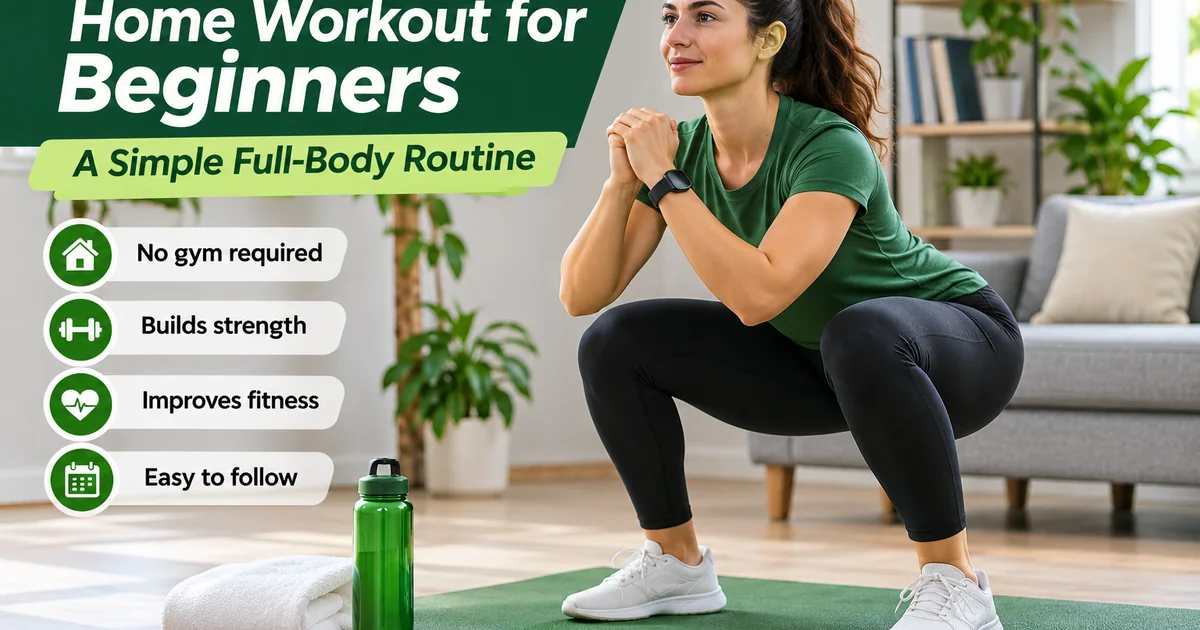
Starting a fitness routine can feel overwhelming, especially when you don’t have gym equipment or much exercise experience. The good news? A home workout for beginners doesn’t need to be complicated. With a little space, a stable chair, and a realistic plan, you can start building strength and confidence right where you live.
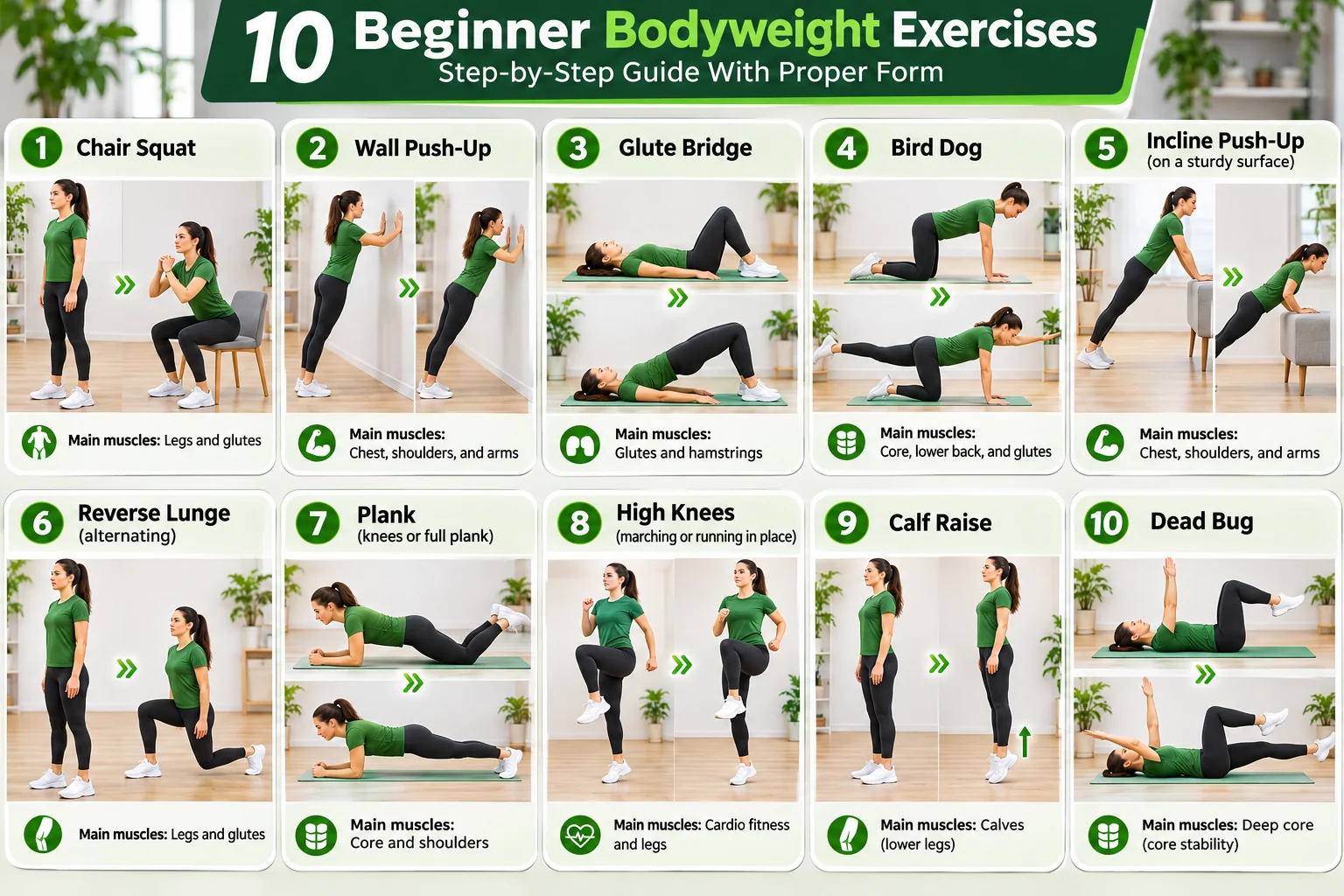
Quick answer: A simple beginner home workout can include chair squats, wall push-ups, glute bridges, bird dogs, supported calf raises, and marching in place. Start with one comfortable round, practice two nonconsecutive days per week as tolerated, and increase gradually. Focus on learning the movements rather than finishing exhausted.
This guide explains the movements, a practical weekly schedule, common mistakes, and ways to adjust the routine to your abilities.
Can Beginners Get Fit Working Out at Home?
Yes. Home workouts can help you develop strength, coordination, mobility, and regular physical activity habits. Your body responds to appropriate movement and resistance whether you’re exercising in a gym or your living room.
For general health, the Centers for Disease Control and Prevention (CDC) recommends that adults work toward at least 150 minutes of moderate-intensity aerobic activity per week, along with muscle-strengthening activities on two or more days. These are long-term targets, not requirements for your first day. Small amounts of activity are still worthwhile.
What Do You Need for a Beginner Home Workout?
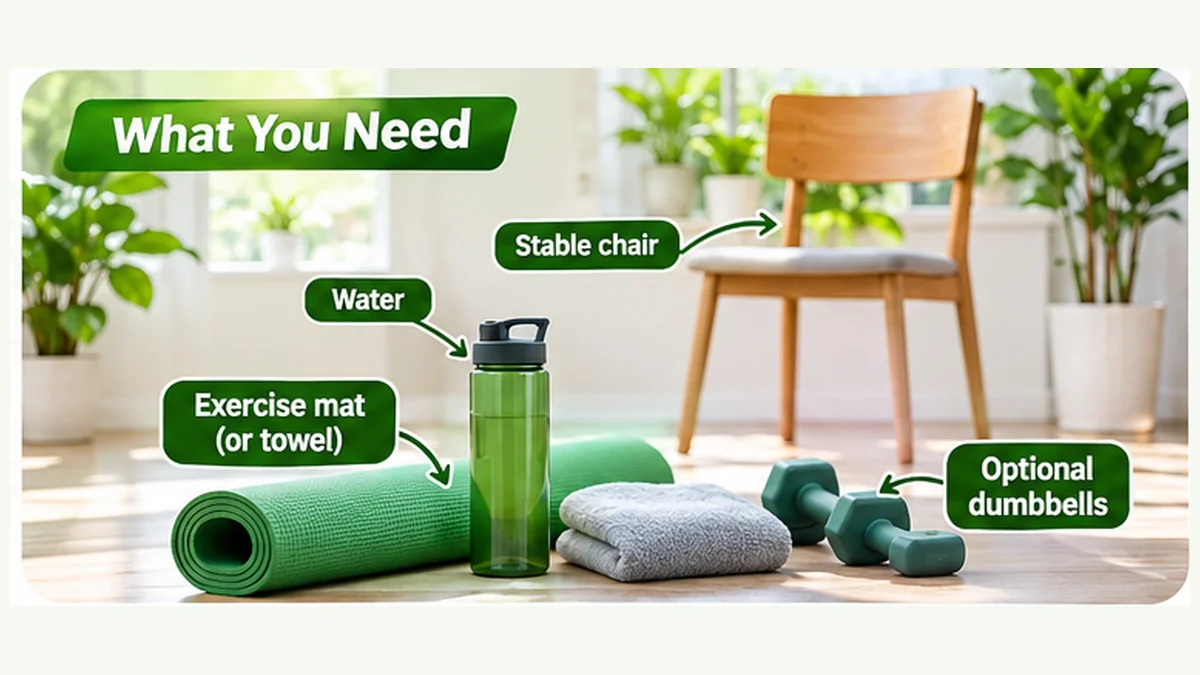
- A small, uncluttered exercise area.
- A stable, non-rolling chair on a non-slip surface.
- Comfortable clothing and supportive footwear when appropriate.
- Water within easy reach.
- An exercise mat or folded towel for floor movements, if comfortable.
- A wall for supported pushing exercises.
Beginner tip: If getting down to the floor or standing back up is difficult, skip floor exercises and use standing alternatives. Your routine should fit your current abilities.
How to Warm Up Before Exercising at Home
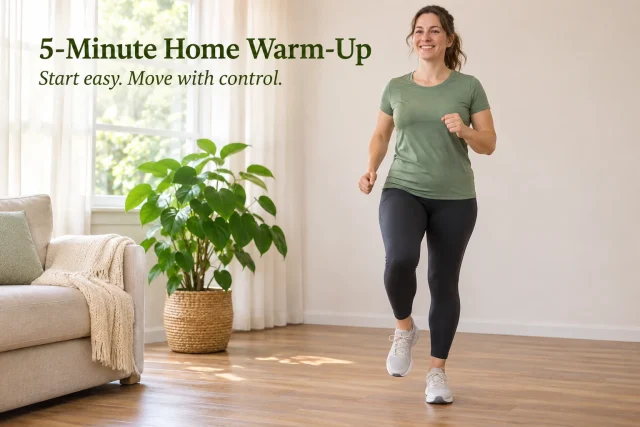
Spend approximately three to five minutes moving gently before beginning. A warm-up helps you transition from rest to activity and check how your body feels.
- Easy marching: March slowly in place for 60 seconds.
- Shoulder rolls: Roll your shoulders comfortably for 30 seconds.
- Gentle side steps: Step from side to side for 60 seconds.
- Controlled arm movements: Raise and lower your arms within a comfortable range for 30 seconds.
- Easy sit-to-stands: Practice two or three slow repetitions using a stable chair.
Avoid forcing stretches or rushing through movements. You should feel ready to exercise, not fatigued before the workout starts.
The 6-Exercise Full-Body Home Workout for Beginners
This routine combines lower-body movement, upper-body pushing, core stability, and gentle aerobic activity. It does not train every major muscle group equally; as you progress, consider adding an appropriate pulling exercise, such as a resistance-band row, to strengthen your upper back.
| Exercise | Starting Amount | Main Focus |
|---|---|---|
| Chair squats | 5–8 repetitions | Legs and hips |
| Wall push-ups | 5–10 repetitions | Chest, shoulders, arms |
| Glute bridges | 6–10 repetitions | Hips and glutes |
| Bird dogs | 4–6 per side | Core control |
| Supported calf raises | 8–12 repetitions | Lower legs |
| Marching in place | 30–60 seconds | Gentle cardio |
How to use this table: Complete one comfortable round. Rest approximately 30–90 seconds between exercises, or longer if needed. These are suggested starting ranges, not minimum requirements. Stop a set if your technique begins to deteriorate.
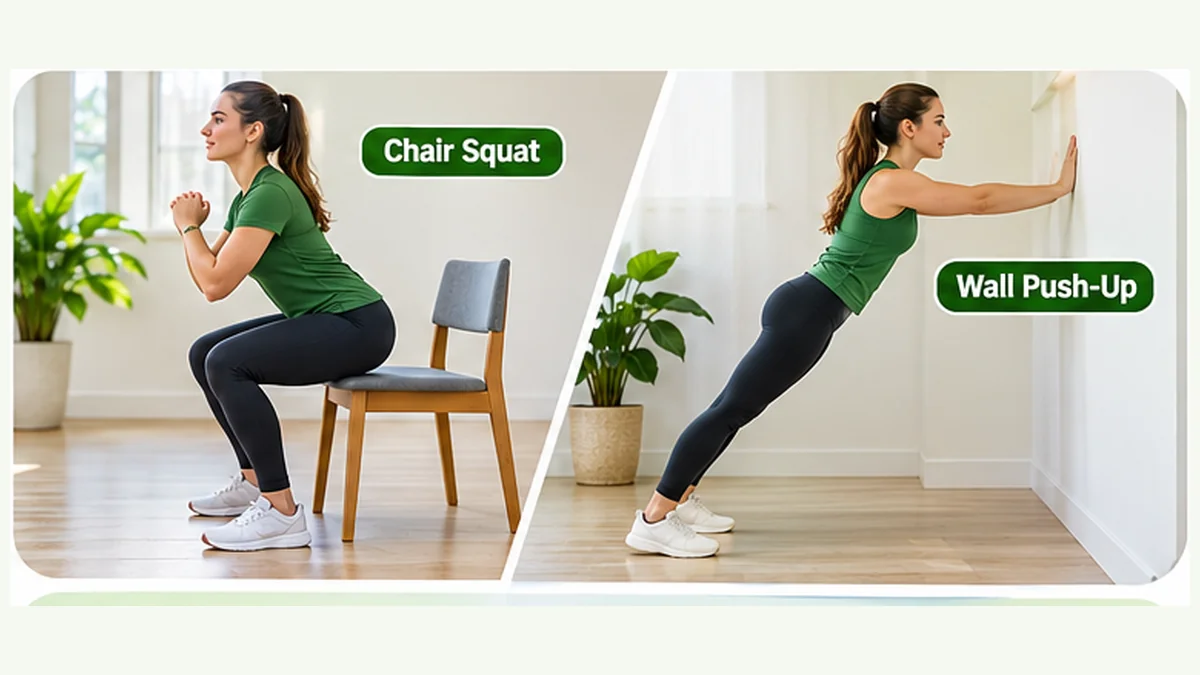
1. Chair Squats
Chair squats help you practice sitting down and standing up while training your thighs and hips.
- Place a sturdy chair against a wall if necessary to prevent movement.
- Stand in front of it with your feet approximately hip-width apart.
- Move your hips backward and bend your knees slowly.
- Lower yourself until you lightly touch the seat or sit down with control.
- Push through your feet to return to standing.
Make it easier: Begin with full sit-to-stands and use your hands for assistance if needed. Avoid: Dropping quickly into the chair.
2. Wall Push-Ups
Wall push-ups let you practice upper-body pushing without the demands of a floor push-up.
- Stand facing a wall and place your hands against it around chest height.
- Step back until your arms are extended comfortably.
- Keep your body aligned and gently brace your abdomen.
- Bend your elbows to bring your chest toward the wall.
- Push through your palms to return to the starting position.
Make it easier: Stand closer to the wall. Make it harder: Move your feet slightly farther away while maintaining control. Avoid: Letting your hips sag.
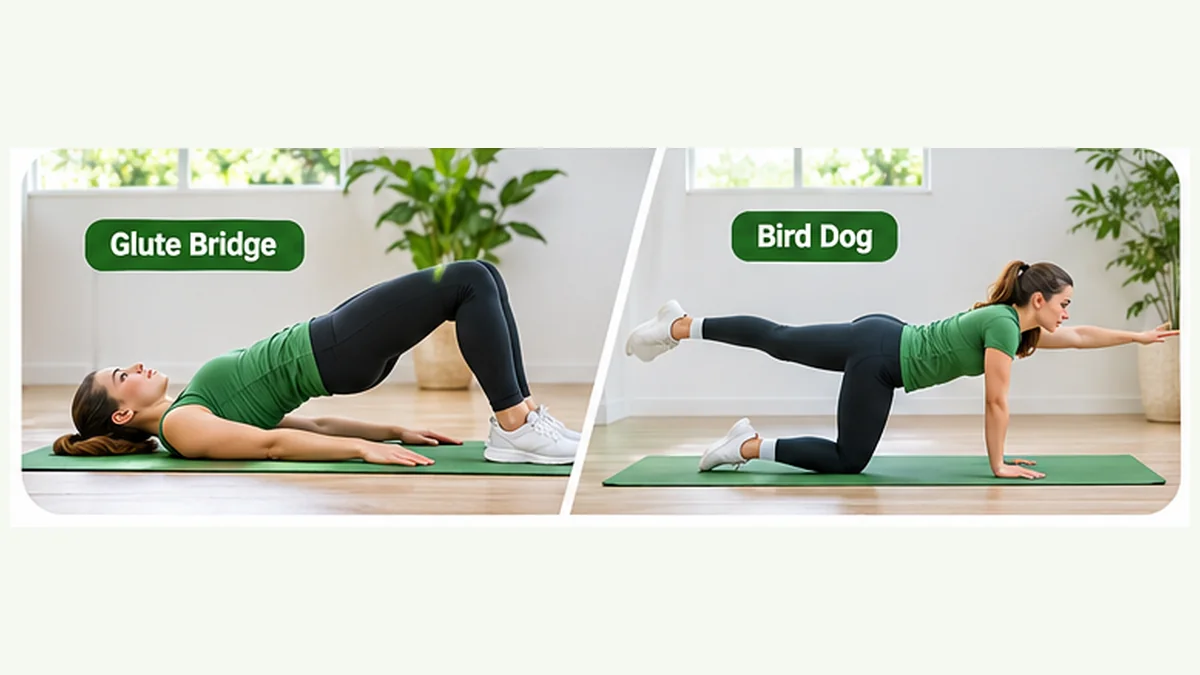
3. Glute Bridges
Glute bridges work the muscles around your hips and help you practice controlled hip extension.
- Lie on your back with your knees bent and feet flat on the floor.
- Keep your arms relaxed at your sides.
- Gently brace your abdomen and squeeze your glutes.
- Lift your hips until your torso and thighs form a comfortable line.
- Lower slowly.
Make it easier: Use a smaller lifting range. Avoid: Excessively arching your lower back. If floor movements are difficult, try supported standing hip extensions instead.
4. Bird Dogs
Bird dogs challenge balance and trunk stability through controlled movement.
- Start on your hands and knees on a comfortable surface.
- Position your hands below your shoulders and knees below your hips.
- Gently tighten your abdomen without holding your breath.
- Extend one leg backward while keeping your hips as level as possible.
- If stable, reach the opposite arm forward.
- Return slowly and switch sides.
Make it easier: Move only one arm or one leg at a time. If kneeling is uncomfortable, skip this exercise and consider supported standing balance work.
5. Supported Calf Raises
Calf raises train the muscles of your lower legs and controlled ankle movement.
- Stand upright behind a stable chair.
- Hold the chair lightly for balance.
- Slowly lift your heels while keeping your weight centered over your feet.
- Pause briefly at a comfortable height.
- Lower your heels with control.
Make it easier: Use a smaller range of motion. Avoid: Bouncing or leaning heavily on the chair.
6. Marching in Place
Marching is a simple way to include light aerobic movement.
- Stand tall with your feet hip-width apart.
- Lift one knee a comfortable distance.
- Lower that foot and repeat with the other leg.
- Keep your pace steady and breathe normally.
- Continue for 30–60 seconds, or less if needed.
Make it easier: March while seated or hold a stable support. Make it harder: Increase your pace gradually without sacrificing balance.
How Long Should a Beginner Home Workout Take?
Your first session may take approximately 15–25 minutes, including warming up, breaks, and cooling down. The exact duration depends on your pace and rest needs. If six exercises feel like too much, start with three: chair squats, wall push-ups, and marching in place.
A Simple Weekly Workout Schedule for Beginners
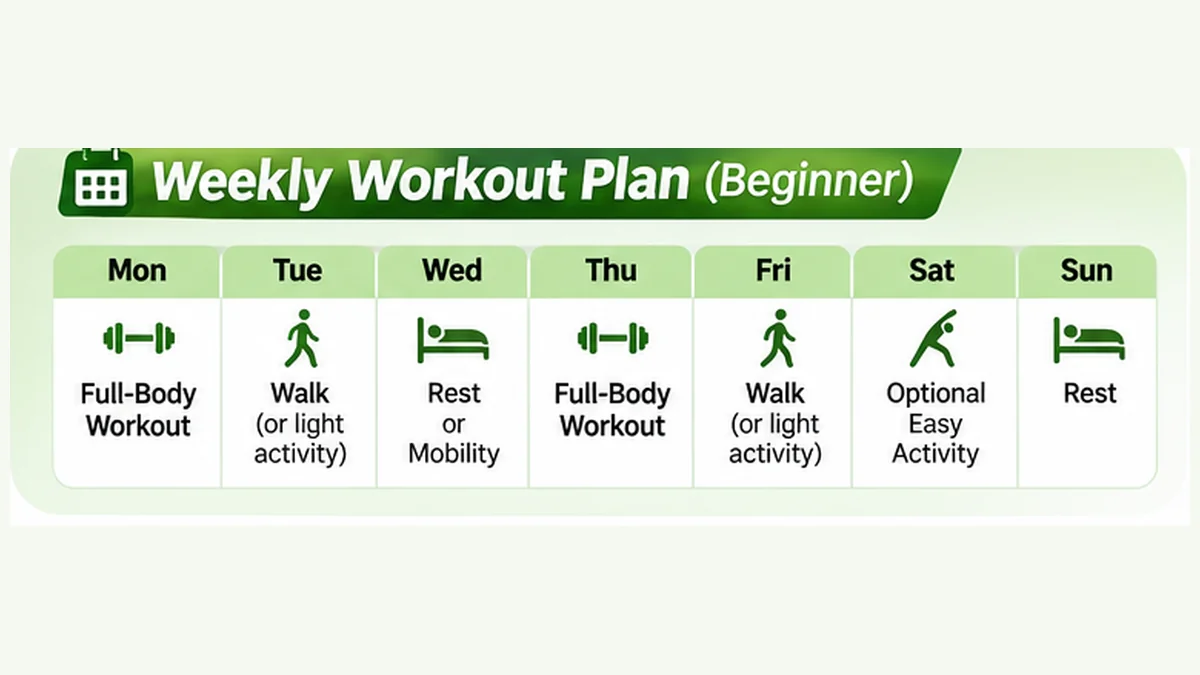
Here’s an example schedule for a generally healthy adult beginning a new exercise habit:
| Day | Suggested Activity |
|---|---|
| Monday | Beginner full-body routine |
| Tuesday | Comfortable walk or gentle movement |
| Wednesday | Rest or light mobility |
| Thursday | Beginner full-body routine |
| Friday | Comfortable walk |
| Saturday | Optional easy activity you enjoy |
| Sunday | Rest or gentle movement |
This schedule separates the two strength-focused sessions to allow recovery. Start walking for a duration you can manage and build gradually toward broader activity recommendations.
How to Make Progress Without Overdoing It
Weeks 1–2: Learn the Movements
- Complete one comfortable round.
- Focus on balance, breathing, and control.
- Use easier variations as needed.
- Record what feels comfortable or challenging.
Weeks 3–4: Build Consistency
- Add a few repetitions if movements feel manageable.
- Consider a second round for one or two exercises.
- Increase walking time gradually if you’re recovering well.
- Maintain recovery time between demanding strength sessions.
After Week 4: Adjust to Your Abilities
- Explore slightly harder variations.
- Consider adding an upper-back pulling exercise.
- Track technique, consistency, and perceived effort.
- Reduce workload when fatigue or discomfort suggests more recovery is needed.
This timeline is illustrative; progress at a pace that suits you.
Common Beginner Home Workout Mistakes
Doing Too Much on Day One
Starting with an intense workout can make consistency harder. Begin with an amount you can manage comfortably.
Rushing Repetitions
Move steadily and prioritize control while learning.
Ignoring Pain
Muscle effort and mild fatigue can be normal, but sharp, worsening, or unusual pain should not be ignored. Stop and seek appropriate advice when necessary.
Skipping Recovery
Alternate challenging activity with lighter movement or rest as appropriate.
Expecting Immediate Results
Track realistic signs of progress, such as improved control, comfortable walking, or a repeatable schedule.
How to Stay Consistent With Home Workouts
- Choose a repeatable time: Pick a slot that fits your day.
- Keep the setup simple: Have your chair and exercise area ready.
- Set a minimum session: On busy days, a short movement break can maintain the habit.
- Track your workouts: Record dates, movements, and how you felt.
- Recognize small improvements: Better control and confidence count.
If you miss a session, resume when you can. You don’t need to compensate with an unusually hard workout.
When Should You Speak With a Healthcare Professional?
Many people can begin with gentle activity. If you have a chronic medical condition, significant injury, concerning symptoms, or uncertainty about exercise suitability, seek advice from a qualified healthcare professional before beginning or increasing activity.
Stop exercising and seek urgent medical assistance for warning signs such as chest pain, fainting, or severe unexplained shortness of breath. Pregnancy, recent surgery, and certain medical conditions may require individualized guidance.
Frequently Asked Questions
Is a 15-minute home workout enough for beginners?
It can be a useful starting point. Choose a duration you can manage safely and consistently, then increase gradually.
Can I do a full-body workout every day?
Gentle movement can be part of each day, but demanding strength sessions generally benefit from recovery time. Two nonconsecutive sessions per week can be a reasonable starting point.
Do I need dumbbells to build strength at home?
No. Bodyweight movements provide resistance, particularly when you’re new to training. Equipment may become useful as you progress.
Should I work out if my muscles are sore?
Mild soreness can occur after unfamiliar exercise. Consider a lighter session or rest if soreness affects movement. Severe pain, swelling, or unusual symptoms warrant medical advice.
What if I cannot do a push-up?
Start with wall push-ups and adjust your distance from the wall to make the exercise manageable.
Can home workouts help with weight management?
Regular activity can support overall health and weight management, but outcomes depend on many factors, including nutrition, sleep, and health status. No single workout guarantees weight loss.
Final Thoughts: Start Small and Keep Going
The most effective home workout for beginners is one you can perform safely and repeat consistently. Choose manageable movements, focus on technique, and allow yourself time to improve.
Your first goal is simple: complete one comfortable session, then plan your next one.
Sources and Further Reading
- CDC — Adult Physical Activity Guidelines
- CDC — What Counts as Physical Activity for Adults
- NHS — Strength Exercises
- NIDDK — Tips for Starting Physical Activity
Medical disclaimer: This article provides general educational information and is not a substitute for personalized medical advice. Exercise selection and intensity should reflect your health and abilities.