How to Lose Belly Fat: A Practical 4-Week Plan for Beginners
If you’re trying to lose belly fat, start with a week you can repeat. Pick one meal you can put together on a busy day, plan a few short walks, and find two days for strength training. The four-week plan below shows how to start and when to adjust.
Choose one eating habit to change
An energy deficit means that, over time, you take in less energy than your body uses. A practical place to start is the meal or drink you already have most days. If you usually drink soda with lunch, try sparkling water on three workdays. If dinner is usually takeout because you get home late, keep a meal you can assemble in under ten minutes.
For a flexible meal, combine a protein food, vegetables or fruit, and a whole grain. Use ingredients you can buy and prepare regularly. Frozen vegetables, canned chickpeas, and oats are useful when fresh food runs out. CDC guide to healthier meals and snacks
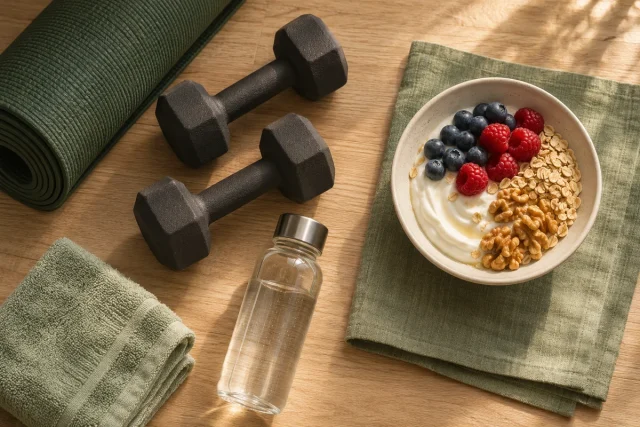
- Breakfast. Plain Greek yogurt with oats, berries, and walnuts. If you prefer a savory meal, try scrambled eggs, tomatoes, and whole-grain toast.
- Lunch. A bowl of brown rice, chickpeas or grilled chicken, cucumber, and tomatoes with lemon and olive oil.
- Backup dinner. Stir frozen vegetables and edamame into microwave brown rice. Season with lemon, garlic, and pepper.
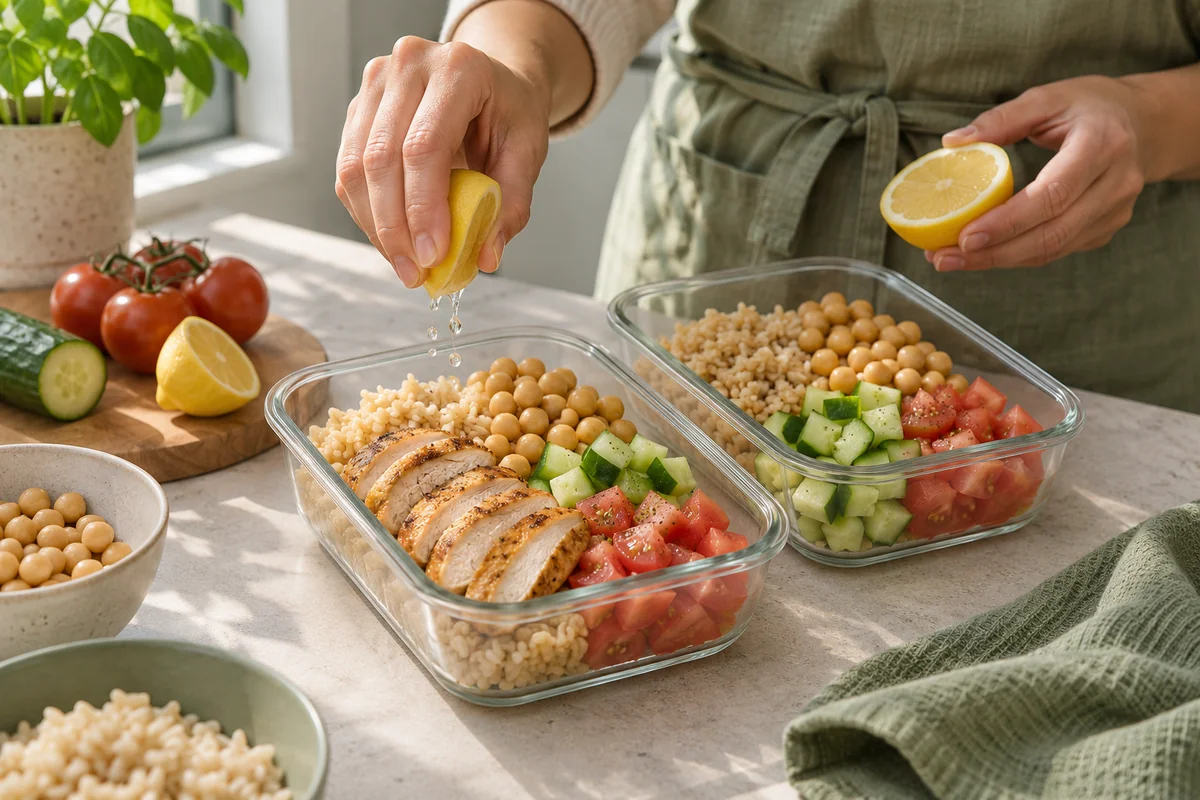
Choose one change for the first week and decide when you’ll use it. “I’ll pack the rice bowl on Monday and Thursday” gives you a clearer starting point than “I’ll eat better.” Keep the remaining meals familiar while you put the new habit into practice.
Start walking and strength training
Try a 10-minute walk after lunch or dinner. Choose a route you can use even when you’re busy, such as a loop around your block or a walk indoors. When you’re ready for a brisker pace, aim for an effort where you can still hold a conversation. For general health, adults can build toward 150 minutes of moderate aerobic activity and at least two days of muscle strengthening per week. An initial week can be much shorter. CDC activity guidance for adults
Try this short strength session twice a week
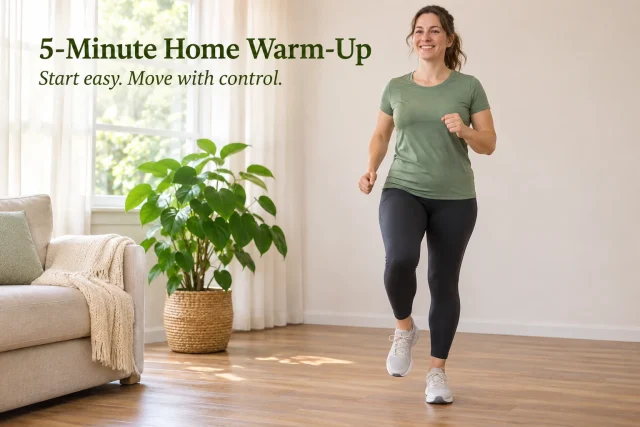
Leave a day between sessions. Start with a few minutes of easy movement, then try one set of 6–10 controlled repetitions of each exercise. Rest between movements as needed.
- Chair sit-to-stand. Sit on a sturdy chair, plant your feet, and stand up. Lower slowly until you sit again. A higher seat can make the movement easier.
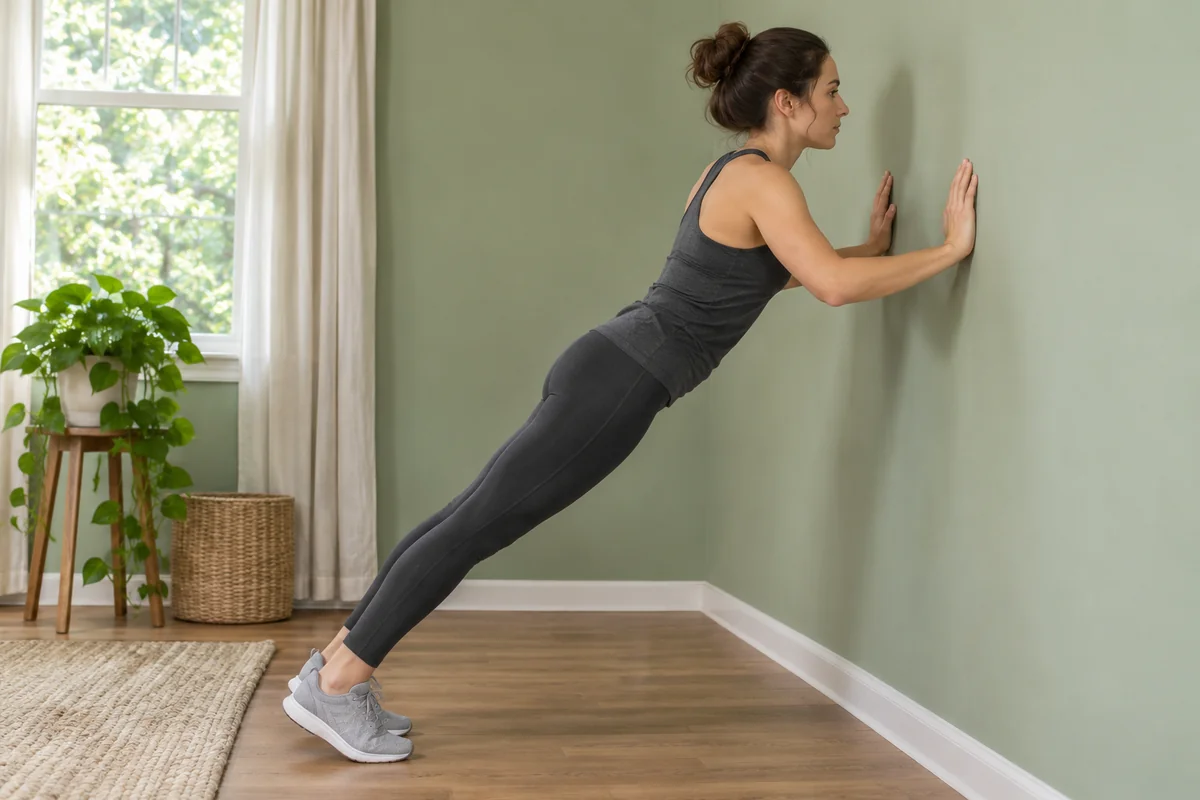
- Wall push-up. Put your hands on the wall at chest level. Bend your elbows to move closer, then press away. Step closer to the wall to reduce the effort.
- Supported row. Place one hand on a stable counter and hold a light water bottle in the other. Pull your elbow toward your ribs, lower the bottle slowly, then switch sides.
- Glute bridge. Lie on your back with feet flat and knees bent. Press through your feet to lift your hips, then lower slowly.
For optional core work, add a short wall plank. Keep a straight line from shoulders to heels and breathe steadily for 10–20 seconds. Use it to practice holding your torso steady.
Follow the four-week plan
Use Monday and Thursday for strength and Tuesday, Friday, and Sunday for walks, or move those sessions to days that fit your schedule. Repeat a week if the routine still feels demanding.
| Week | Food habit | Activity |
|---|---|---|
| 1 | Try one meal or drink change three times. | Take three 10-minute walks and try the strength session twice. |
| 2 | Stock ingredients for one backup dinner. | Add five minutes to one walk if week one felt comfortable. |
| 3 | Use your backup meal on a busy evening. | Keep walking. If the strength exercises feel steady, add one repetition to each set. |
| 4 | Keep the meal change that was easiest to repeat. | Review your sessions and choose one small increase for next week if you feel ready. |
If you miss a session, resume with the next one you planned. On a busy day, a five-minute walk or one set of two familiar exercises can keep the routine going.
Track progress and adjust
Record your walks, strength sessions, and planned meals during the first week. A note such as “three walks after lunch, two home workouts, cooked twice” gives you a starting point to compare against next month.
If you want to track waist size, use a flexible tape just above your hip bones, keep it level and snug, and read it after breathing out normally. Measure under similar conditions each time and compare readings over several weeks. Waist circumference is an indirect measure. A single reading can’t tell you how much abdominal fat you have lost. American Heart Association waist measurement guide
- If you keep missing walks, attach one to an event that happens reliably, such as lunch or arriving home.
- If the planned meals leave you hungry, check what you’re eating across the day. Try including a protein food and fiber-rich ingredients at the meal that leaves you least satisfied.
- If your waist looks the same after four weeks, review the habits you repeated and compare several readings before deciding what to change. If the routine felt manageable, choose one small adjustment and give it time. CDC guide to setting and reviewing weight-management goals
Common questions
Can walking help me lose belly fat?
Walking contributes to overall physical activity and energy use. It can support a weight-management routine alongside eating habits you can maintain. CDC guidance on physical activity and weight
Will crunches reduce my waist?
Crunches train abdominal muscles. In a small six-week trial, participants who did abdominal exercises improved their muscular endurance without a significant change in abdominal fat. Vispute et al., 2011
What should I expect after four weeks?
Look for evidence that the routine is getting easier to follow. See whether you can walk for longer at the same effort, complete your strength sessions regularly, or assemble the meals you planned. Changes in waist size vary by person. If you’re unsure whether weight loss is appropriate for you, a healthcare professional can help you set a suitable goal.