


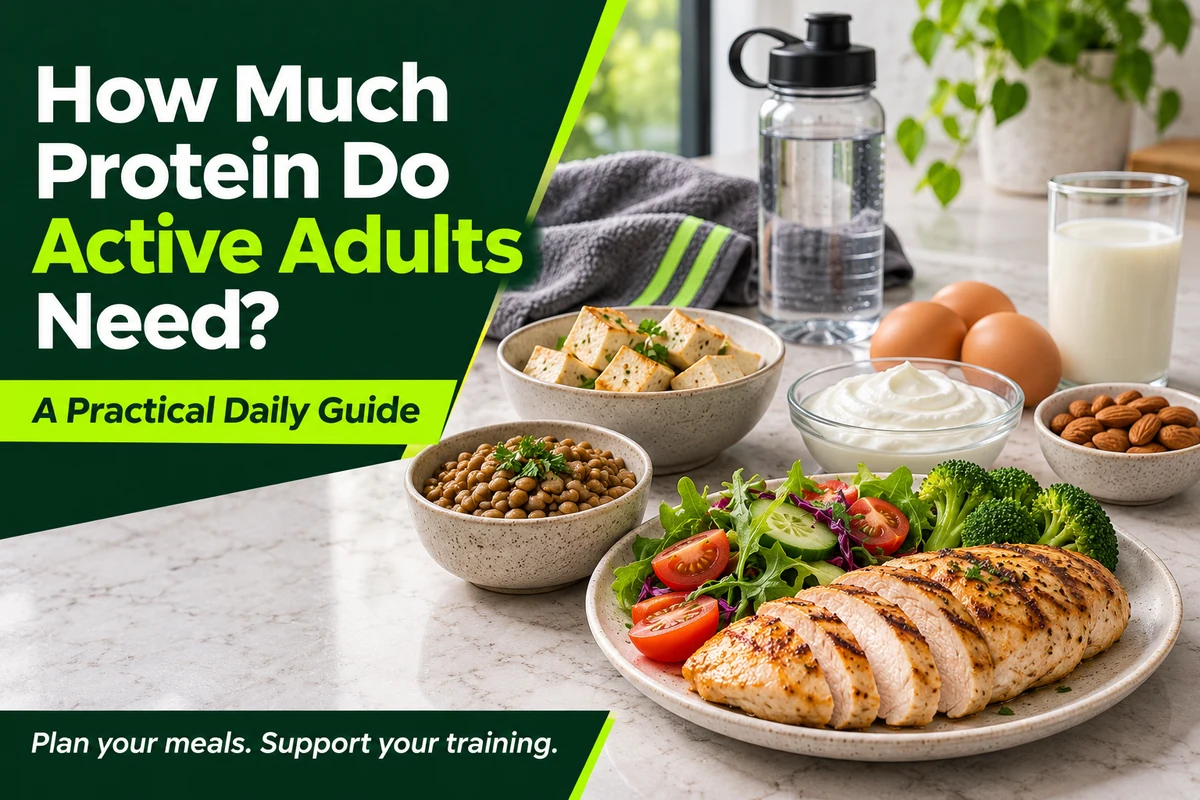
How Much Protein Do Active Adults Need?
Many healthy adults who exercise regularly can use roughly 1.2 to 2.0 grams of protein per kilogram of body weight per day as a practical planning range. That is about 0.55 to 0.9 grams per pound. Your training and goals determine where a reasonable starting point might fall.
The quick answer. An active adult weighing 70 kilograms or about 154 pounds would get 84 to 140 grams daily within that range. Someone doing regular strength training might start planning around 1.6 grams per kilogram. For that same person the calculation gives 112 grams per day.
These are planning estimates for healthy adults rather than a personalized prescription. Light daily movement does not automatically require an athlete’s intake. Kidney disease and some other health circumstances require individual advice.
This guide explains daily protein needs for active adults without turning every meal into a mathematics test. You will learn how to calculate a starting amount and distribute it across meals. You will also find food comparisons and realistic meal planning examples alongside guidance on supplements and common tracking mistakes.
Understand what the protein numbers actually mean
Protein recommendations can look contradictory when they describe different purposes. A general population reference intake addresses a different question from a sports nutrition target. Neither tells you that every additional gram produces more muscle or that your current diet is inadequate simply because you began exercising.
The general adult reference is not a training specific target
The commonly cited adult recommended dietary allowance is 0.8 grams per kilogram daily. It is intended to meet the needs of nearly all healthy adults in the general population. It is not an intake optimized for every training goal. The American College of Sports Medicine protein guidance discusses higher intakes in the context of maintaining and developing muscle with exercise.
For a 70 kilogram adult the arithmetic for 0.8 grams per kilogram is 56 grams. Compare that with 112 grams at 1.6 grams per kilogram. These are answers to different planning questions. The difference does not mean everyone needs to double their intake or that the lower figure is a universal deficiency threshold.
Regular training changes the context
The NIH Office of Dietary Supplements sports performance fact sheet describes an athlete protein range of 1.2 to 2.0 grams per kilogram daily. Applying that range to recreational exercisers still requires judgment about training demands and health.
A person taking comfortable walks after work is not necessarily comparable to someone lifting weights and completing long cycling sessions. Before choosing a number describe what you actually do in a typical week. Specific details are more useful than simply calling yourself active.
Choose a starting target that fits your training
Use the table below as a decision aid rather than a set of diagnostic categories. The examples translate broad sports nutrition guidance into practical starting discussions. They do not establish a separate official recommendation for every hobby or number of weekly workouts.
| Your situation | Planning approach | What deserves attention |
|---|---|---|
| Mostly light movement | Review your existing balanced diet before adopting a sports target | A few easy walks do not establish an athlete level requirement |
| Regular recreational exercise | Consider the lower part of the 1.2 to 2.0 g/kg range | Actual training workload and enough food overall |
| Consistent resistance training | About 1.6 g/kg can be a useful starting estimate | Progressive training and a repeatable eating routine |
| High training demand or calorie restriction | Discuss whether the upper part of the range suits you | Recovery and energy availability rather than protein alone |
| A medical condition affecting nutrition | Use an individualized professional recommendation | Do not select a generic sports target |
You do not need to choose the largest number to take your training seriously. Start with a defensible estimate that you can achieve through normal meals. Then review the whole routine rather than continually raising protein whenever a workout feels difficult.
What research around 1.6 grams per kilogram tells us
A systematic review and meta-analysis by Morton and colleagues examined protein supplementation alongside resistance training. Its analysis estimated a breakpoint around 1.62 grams per kilogram for additional gains in fat free mass. The estimate had substantial uncertainty and is not a precise ceiling for every individual.
The practical lesson is that ever larger intakes do not guarantee larger results. This evidence concerns resistance training outcomes. It does not establish one perfect dose for runners or explain your personal response to a specific menu.
Choose a reasonable daily target first. Build meals you can repeat second. Fine tuning becomes useful after those foundations are in place.
Calculate your daily protein needs step by step
The calculation uses body weight and a chosen grams per kilogram estimate. Write down the units before multiplying. Confusing pounds with kilograms can produce a much larger answer than intended. You can use a calculator on your phone without needing a specialized nutrition app.
Follow these steps once to establish a practical starting figure. Keep the result simple enough to use while shopping and cooking. Your meals will naturally vary and food labels are not measurements of your exact physiological requirement.
- Find your body weight in kilograms. If you use pounds divide that number by approximately 2.2.
- Select an appropriate planning estimate based on your training and health context.
- Multiply kilograms by grams per kilogram to estimate grams of protein per day.
- Round to an easy planning number rather than chasing decimal places.
- Compare that target with what your normal meals already provide.
If your calculation gives 113 grams then planning around 110 to 115 grams is more practical than trying to hit 113 exactly. Small differences between ordinary days are expected. The point is to create a workable pattern rather than a daily pass or fail test.
A worked example using kilograms
Suppose a healthy adult weighs 75 kilograms and lifts regularly. Using 1.6 grams per kilogram gives 75 multiplied by 1.6 which equals 120 grams daily. The next task is to distribute roughly that amount across familiar foods rather than immediately purchasing a supplement.
A worked example using pounds
Suppose another adult weighs 180 pounds. Dividing 180 by 2.2 gives approximately 82 kilograms. At an illustrative 1.4 grams per kilogram the result is about 115 grams daily. That factor is a planning choice for the example rather than a requirement established by weighing 180 pounds.
When body weight calculations need help. Large differences in body composition and major weight changes can make a simple actual body weight formula less appropriate. A dietitian can choose a suitable basis for calculation. Do not switch to an arbitrary goal weight simply because it produces a preferred number.
Daily protein chart by body weight
This chart shows arithmetic at three reference factors within the broad active adult planning range. The columns are not labels for beginners and intermediate and advanced athletes. Use the factor that fits your circumstances rather than treating the final column as a goal everyone must reach.
| Body weight | Approximate pounds | At 1.2 g/kg | At 1.6 g/kg | At 2.0 g/kg |
|---|---|---|---|---|
| 50 kg | 110 lb | 60 g | 80 g | 100 g |
| 60 kg | 132 lb | 72 g | 96 g | 120 g |
| 70 kg | 154 lb | 84 g | 112 g | 140 g |
| 80 kg | 176 lb | 96 g | 128 g | 160 g |
| 90 kg | 198 lb | 108 g | 144 g | 180 g |
| 100 kg | 220 lb | 120 g | 160 g | 200 g |
For example an 80 kilogram adult using the middle column would plan around 128 grams. That does not mean a day with 123 grams is unsuccessful. The value is an estimate derived from a chosen factor rather than a laboratory measurement of that person’s need.
How much protein should you eat per meal?
Once you have a daily estimate divide it into eating occasions that already fit your life. The International Society of Sports Nutrition position stand on protein and exercise discusses servings of roughly 20 to 40 grams and distributing protein through the day. Meal size and body size and training context affect that discussion.
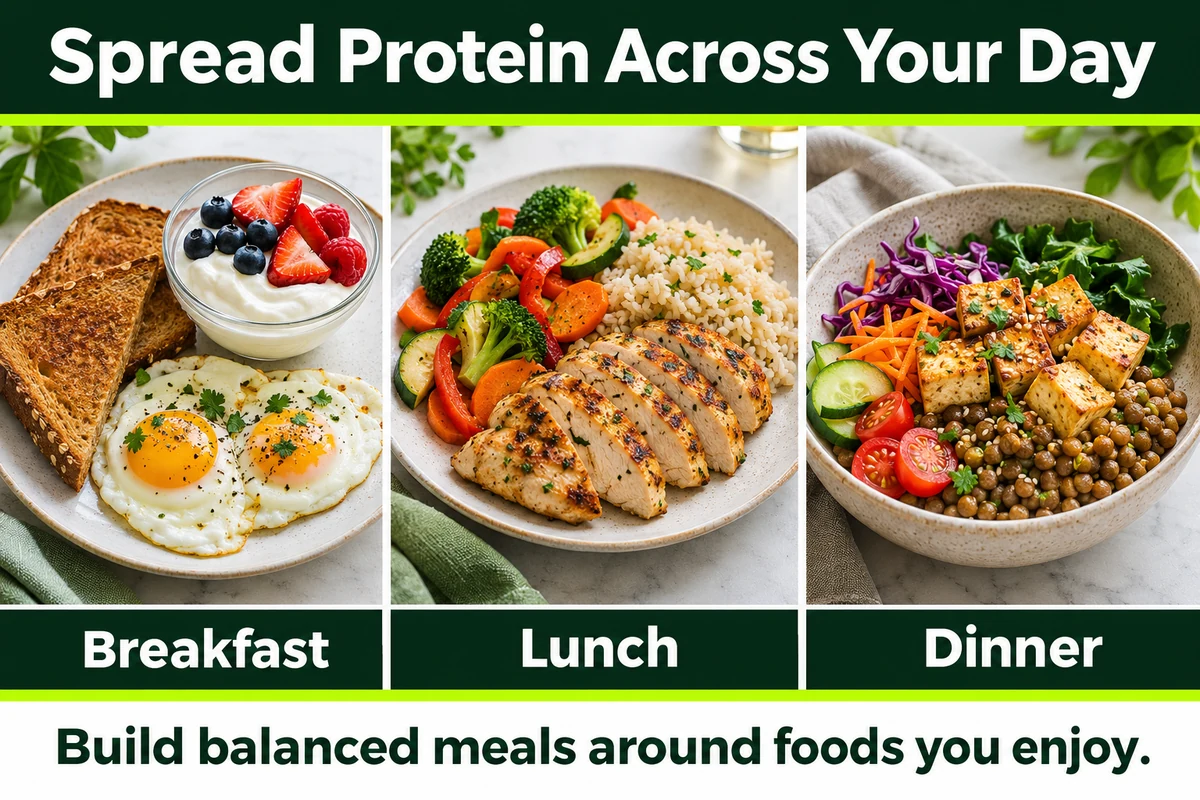
You do not need every meal to contain an identical amount. For a 120 gram target one simple arrangement is four eating occasions averaging 30 grams. Another is three meals around 35 grams plus a snack around 15 grams. These are organizing examples rather than competing physiological rules.
Improve the meal that is currently missing protein
Before adding a second evening shake inspect breakfast and lunch. If breakfast is only coffee and toast then adding yogurt or eggs or an appropriate soy option might be the simplest change. Keep the rest of the meal useful by including foods you enjoy and enough energy for the day.
Do not treat one large meal as wasted
The body can digest protein beyond a small fixed serving. Digestion is different from maximizing the muscle building response to a particular meal. A larger dinner is not automatically wasted. For practical planning it can still be easier to share your intake across several meals than to leave nearly everything until nighttime.
What counts as a useful protein food?
A food can contain protein without being an efficient way to supply most of your target. Nuts contribute useful nutrients but their protein comes with substantial energy. Beans bring fiber and carbohydrate as well as protein. Compare foods by the role they play in the meal rather than judging them on a single number.
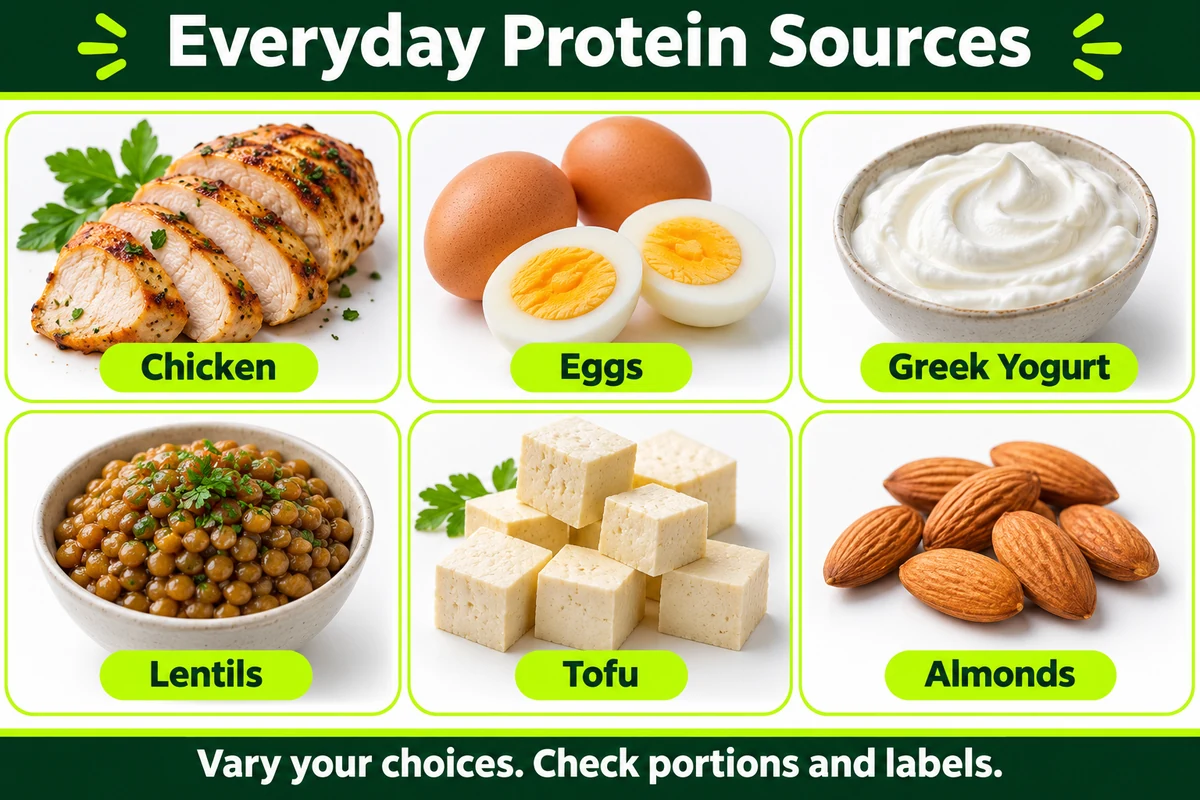
The amounts below are rounded everyday estimates. Brand and preparation and water content change the values. Use the label on packaged foods and a matching entry in USDA FoodData Central when checking an unlabelled food. Match cooked food to a cooked entry and dry food to a dry entry. The Harvard Nutrition Source protein comparison also illustrates familiar portions such as lentils and milk and almonds.
| Food | Portion | Approximate protein | Useful planning detail |
|---|---|---|---|
| Chicken breast | 100 g cooked | About 30 g | Cooked weight differs from raw weight |
| Eggs | Two large eggs | About 12 to 13 g | A meal may need another source to reach your chosen amount |
| Plain strained Greek yogurt | 200 g | About 18 to 22 g | Regular yogurt can contain less protein |
| Milk | One cup around 240 mL | About 8 g | Plant drinks vary widely |
| Cooked lentils | One cup | About 18 g | Also supplies carbohydrate and fiber |
| Firm tofu | 150 g | Often about 18 to 26 g | Check the product because firmness and water content vary |
| Almonds | 28 g | About 6 g | Useful addition rather than an automatic main protein source |
These foods do not replace one another gram for gram. A cup of lentils and a portion of chicken create different meals. Choose combinations that suit your appetite and preferences while also considering vegetables and grains and other nutrients.
Read the protein line rather than the package headline
A product marketed as high protein may still provide less than you expect in the amount you actually eat. Check grams per serving and the stated serving size. If the label uses 100 grams but your portion is 60 grams then multiply the listed protein by 0.6.
Food weight is different from protein weight
A 150 gram piece of chicken does not contain 150 grams of protein. It also contains water and other components. Likewise the weight of a scoop of powder is different from the grams of protein listed for that scoop. Keep those two measurements separate when logging meals.
A food first example day around 120 grams
The following day illustrates meal planning rather than prescribing portions for every reader. The estimates use selected foods and assumed label values. Add vegetables and fruit and suitable carbohydrate and fats to make complete meals. The table is not a full calorie plan.
| Eating occasion | Protein contribution | Estimated grams |
|---|---|---|
| Breakfast | Two eggs plus 200 g Greek yogurt assumed to provide 20 g | 33 g |
| Lunch | 100 g cooked chicken breast | 30 g |
| Afternoon snack | One cup milk plus 28 g almonds | 14 g |
| Dinner | One cup cooked lentils plus 150 g tofu assumed to provide 24 g | 42 g |
| Total from listed foods | Other meal ingredients may contribute additional protein | 119 g |
The arithmetic is 33 plus 30 plus 14 plus 42 which equals 119 grams. There is no need to find exactly one more gram. Actual products and side dishes will change the total. The example demonstrates that ordinary food can cover a substantial target without a mandatory shake.
Make the example fit your day
If the breakfast feels too large move the yogurt to a later snack. If you dislike chicken choose another suitable source and check the portion. A plan becomes more useful when it fits your appetite and cooking habits rather than when you copy every item exactly.
Can plant based meals meet active adult protein needs?
Plant based planning works best when each main meal has a deliberate protein source. Think about tofu and tempeh and beans and lentils and soy foods rather than assuming a vegetable heavy plate automatically supplies enough. Check packaged alternatives because their protein content can differ considerably.
Build variety across the day
A varied pattern helps provide the essential amino acids your body needs. You do not have to create an exact complementary pairing at every meal. However repeatedly eating a very narrow selection can make planning harder. Include different protein foods and enough total food across the day.
Check drinks and substitutes carefully
Replacing dairy milk with a low protein plant drink can lower your daily total even when the carton looks similar. Replacing meat with a vegetable patty can do the same. Compare actual labels before assuming the substitute supplies an equivalent amount.
For example suppose your usual breakfast drink contributed 8 grams and its replacement supplies 1 gram. That is a 7 gram difference to account for elsewhere if needed. This hypothetical label comparison is more useful than declaring every plant drink good or bad.
Protein when building muscle or losing weight
Muscle gain requires a training stimulus
Protein provides building material but it does not replace resistance training. Before increasing an already adequate intake review whether your training is consistent and appropriately challenging. Also consider sleep and total food intake. Buying a larger tub cannot repair a routine that rarely happens.
During weight loss keep the whole plan workable
Calorie restriction can make preserving lean tissue a greater priority. Your protein choice should sit alongside resistance training and an appropriate energy intake. Avoid importing extreme dieting protocols from competitive athletes into an ordinary fitness routine. A dietitian can help when your goals or circumstances are more complex.
Consider the practical tradeoff when adding food. If a shake is an addition it changes total energy intake. If it replaces a meal it changes the nutrients and food volume you receive. Decide which role it serves instead of treating protein calories as invisible.
Do timing and rest days change the answer?
You do not need to panic after your last repetition
Arrange meals around training in a way that is comfortable. If you ate a protein containing meal before exercise then an immediate shake may be unnecessary. If you trained after a long period without food then making a normal meal available afterward is a practical choice. Daily intake still deserves attention.
Keep a similar pattern on rest days
Rest days are part of the training week. For most recreational routines keeping a broadly consistent protein pattern is simpler than recalculating it every morning. You might change portions of other foods as your appetite and energy needs vary without deliberately removing protein because you skipped the gym.
When a protein supplement is useful
A powder can be convenient when ordinary food is unavailable or a meal falls short of a reasonable target. It is an optional tool. Start by identifying the gap. If your normal intake is already close to your estimate then a large daily supplement may add little practical value.
Before choosing a product compare the following details. The best choice for your situation should solve a specific problem and fit your budget. Package design and muscular advertising models do not tell you whether the product suits your diet.
- Check protein grams in the actual serving rather than the weight of powder.
- Read the ingredients and allergen information.
- Consider taste and digestive comfort before buying a large container.
- Compare cost per useful serving rather than container price alone.
- Look for credible independent product testing and understand what the certification covers.
Testing can address particular quality concerns but cannot guarantee that a product will improve your results. The FDA dietary supplement questions and answers explains that supplements are generally not approved for safety and effectiveness before marketing in the way medicines are.
Compare cost using a simple example
Suppose one powder costs 30 dollars for 20 servings that each provide 25 grams of protein. Each serving costs 1.50 dollars. Another costs 24 dollars for 20 servings providing 15 grams each. Its lower price does not automatically mean a lower cost for the same protein amount.
These are invented prices for demonstrating arithmetic rather than current product quotations. Apply the method to products you can actually buy. Include foods in the comparison too. Convenience can justify a higher cost but it should be a conscious choice.
When general protein advice needs individual adjustment
Kidney disease needs a separate plan. Do not apply sports protein targets without guidance if you have chronic kidney disease. Some people need adjusted protein while those receiving dialysis may have different requirements. The NIDDK guidance on eating with chronic kidney disease recommends working with a health professional to find the right balance.
Older adults need attention to meal practicality
Age can change appetite and meal preparation and training circumstances. The National Institute on Aging meal planning guidance encourages including protein foods throughout the day. Someone struggling to eat enough may need easier meals and support rather than a higher numerical target alone.
Other situations also deserve specific advice
Pregnancy and recovery from major illness and medically prescribed diets are outside the scope of this general guide. A history of disordered eating can also make detailed macro tracking unhelpful. A suitable professional can offer an approach that supports health without making meals more stressful.
Common mistakes that make protein planning harder
Most practical mistakes begin with an assumption rather than a complicated calculation. You can catch them by reviewing a few ordinary meals. Keep the process brief enough that it helps you cook and shop rather than taking over your day.
- Multiplying a grams per kilogram factor by pounds without converting.
- Logging raw food with a cooked food entry.
- Assuming every yogurt or plant drink has the same protein content.
- Counting a scoop of powder by its total weight.
- Leaving nearly all protein until a very large evening meal.
- Adding more protein while overlooking insufficient overall food or inconsistent training.
If one of these applies then correct that issue before changing the target. A better measurement can explain a confusing total. You rarely need a more complex calculator to fix a serving size or unit mismatch.
A simple seven day protein planning experiment
Use the first week to understand your meals. This is an organizational exercise rather than a test of muscle growth. Short term changes in weight or soreness cannot isolate the effect of protein. The useful outcome is a routine that is easier to repeat.
Work through the following sequence without demanding perfect numbers. If tracking creates anxiety then use meal based planning with professional support instead. The aim is to identify manageable changes rather than monitor every bite indefinitely.
- Choose a reasonable starting estimate for your health and activity.
- Write down a few typical meals and check the labels of foods you use often.
- Identify one eating occasion that regularly lacks a useful protein source.
- Add or adjust one familiar food at that meal.
- Prepare a convenient backup for busy days.
- Review cost and appetite and digestive comfort.
- Keep the changes that make the routine easier and revise those that do not.
At the end of the week you should know which foods do most of the work and where the gaps tend to appear. That information is more actionable than a target saved in an app with no plan for breakfast or lunch.
Frequently asked questions about daily protein needs for active adults
Is 100 grams of protein enough?
It depends on body size and training and the planning factor being used. For a 60 kilogram adult it equals about 1.67 grams per kilogram. For a 90 kilogram adult it equals about 1.11. A single fixed number cannot answer the question for everyone.
Do women need a different calculation?
Sex alone does not create one universal daily target. Body size and training and life stage matter. Two adults of similar body size and training may use similar starting calculations while pregnancy or particular health circumstances require separate guidance.
Can you meet the target without meat?
Yes. Use deliberate combinations of foods such as dairy or eggs when included and soy foods and legumes. A fully plant based routine needs suitable choices and portions. Review actual food labels rather than assuming a meat substitute has matching protein.
Does soreness mean you need more protein?
Soreness alone cannot identify a protein shortfall. New exercise and training changes can affect how you feel. Review your overall intake and workload and recovery instead of automatically adding a shake. Persistent pain or unusual symptoms deserve appropriate assessment.
Should you force food to hit the exact number?
A planning estimate is not a requirement measured to the gram. If meeting it repeatedly feels uncomfortable then review the estimate and meal structure. You may need different portions or a different target rather than a rule that forces you to finish food every evening.
Build a protein routine you can maintain
Start with your actual training and calculate a reasonable daily estimate. Then choose familiar foods and distribute them across meals that fit your day. Check serving sizes before buying supplements and keep room for the rest of a balanced diet.
The most useful protein plan answers a practical question. What will you eat at your next few meals. When you can answer that comfortably you have a better foundation than a perfect looking target with no workable routine behind it.
Sources and editorial scope
The official guidance and published research linked above support the intake ranges and health qualifications. Calculation tables are arithmetic examples. Meal plans and shopping scenarios are original educational illustrations with rounded estimates. They are not individualized medical nutrition plans or claims of personal testing. Sources were checked on November 4 2026.